



Everyone tries to simplify success in business with an equation. I’ve resisted this simplicity because sometimes an equation complicates business. But at times it can be beneficial.
Consider the success the Bill and Melinda Gates Foundation had in mitigating diseases in Africa. Through data analysis, their team identified that a large percentage of infections occurred around the borders of African countries. During interviews with medical personnel and country leaders, it was determined that each country thought the other country had taken care of those villages close to their borders with vaccinations and supportive hygiene tools. The solution to reducing the disease by more than 80% was simply identifying where the disease was, putting some energy and coordination behind the effort, and executing on the needed steps.
At the end of the day, I believe success is truly simple. So, I’ve created a simple equation. Effort – Energy – Execution
When I think about success in any endeavor, I try to boil things down to effort, energy and execution. All components are equally important. And all components tend to multiply themselves. I call it E3. Let me break down each component and their multiplying effect on each other.
Effort
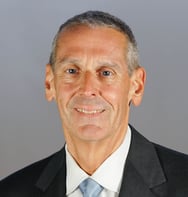 |
| Mike McGlothlin, CFP, CLU, ChFC®, LUTCF®, NSSA® Executive Vice President of Retirement Ash Brokerage |
Effort represents an intentional investment of time, focus and resources toward your goal (or the client’s goal). Effort can be both strategic and tactical. Strategic effort is identified by choosing the right clients to specialize in retirement income planning.
Your expertise might play an important role in Social Security elections, tax-efficient withdrawal sequencing or guaranteed income integration. On a tactical level, we are charged with hours spent modeling client outcomes and working to improve those outcomes. That involves modeling, developing customized income strategies, and analyzing risks in retirement outside of income generation.
Energy
Energy is not just passion or enthusiasm. It has three separate components: physical energy, mental energy and emotional energy. All need to be balanced and serve as a force multiplier for energy to have a positive effect on success. Let’s break them down.
Physical Energy: Everyone needs to have physical energy. It’s vital to do the quality work that we need to do to help more Americans improve their outcomes. This requires a commitment to nutrition, exercise and sleep. I talk a lot about three metrics that most general practitioners don’t share but that are important contributors toward energy levels. You need to know your VO2 Max, body fat composition, and phase angle. These are foundational to better wellness which leads to physical energy.
Mental Energy: We must have the cognitive capacity to understand the complexity of retirement income planning and problem solving. This requires a thirst for knowledge, curiosity for new planning opportunities and a willingness to learn. It’s important to be able to communicate complex ideas into simple terms for clients to understand, which leads to the third pillar of energy.
Emotional Energy: Our Practice Management Director always reminds our advisors that every client deserves the same amount of empathy but not the same amount of time. We must be present at every client interaction and understand their concerns from their perspective. This builds trust and confidence.
The high-performing financial professional with optimized energy can maintain sharp focus during complex retirement modeling and back-to-back client meetings without depletion of their energy. The ability to architect impactful strategies while remaining personal will build client relationships and grow business.
Energy is not infinite. Depleted energy shows up in hastily created plans that don’t differentiate you from the competition, delayed responses and errors. Clients mirror your energy, so your energy sets the tone for the client engagement.
Execution
Without execution, all the effort and energy go to waste. Execution is what separates most financial professionals. The ability to implement complex solutions with clients demands three things: clarity, accountability and monitoring. A straightforward plan executed well with discipline generates surprisingly improved outcomes for the client.
Clarity: The client needs to have the specific steps in the income plan need to be defined. For example, income will be generated from this source for the first segment of retirement, another source will provide longevity protection, and here is where we will be able to increase your income if inflation takes away your purchasing power. The ability to explain the complexity of retirement income to the client adds adherence to the plan which results in higher retention of assets.
Accountability: This goes beyond the advisor/client relationship. Many professionals need to be involved in a strategic income plan, especially with mass-affluent and high-net-worth families. Accounts, estate planners, insurance professionals and financial planners all need to be on the same page. Each party, including the client, needs to have clearly assigned tasks for implementation. And they need to make sure the plan is monitored.
Monitoring: Too often, I see great plans get blown up by the lack of monitoring. We live in a volatile world with nearly seamless economic connectivity. One world event cascades to our economy quickly. The rate of return is less important during retirement than the source and sustainability of income. Regardless of the components of the plan, each financial professional needs to update and monitor the plan regularly.
The Multiplication Effect
The power of E3 is not in addition but in multiplication:
Effort alone creates incremental practice improvement. Anyone will tell you intentional effort will move you toward your goal.
Effort + Energy provides sustainable professional development that leads to more vitality, mental clarity and focus on serving the client.
Effort + Energy + Execution = Exponential client outcomes and business growth.
The multiplication effect is truly cubic:
Effort multiples Energy because focused effort toward a meaningful goal typically leads to sustained motivation.
Energy multiplies Execution because it can accelerate decisions and achieve a higher quality of planning and monitoring.
Execution multiples Effort because client success fuels more professional development, new target markets and justifies reinvestment in the business.
E3 reinforces a positive cycle of success.
Each component doesn’t exist independently. They are interconnected. When one is not functioning fully, the others suffer. When we have a high analytical skill set but don’t create empathic energy, we lose execution. This creates a downward spiral for our business. Instead, having a focus on E3 in totality allows for continuous and consistent growth.
How Do You Apply for Growth in Income Planning
With a cubic effect on the E3 methodology, it’s important to focus on what this means to you, a financial professional looking to grow your business, especially with income planning.
Invest in our own E3 Foundation: Strategic and tactical planning are imperative to the success of your practice. Invest in a clearly defined strategy to bring new prospective clients into the firm or focus on those clients that have changing needs. Learn new aspects of income planning as Peak 65 will continue for several more years. Those turning 65 now will turn 75 in 10 years and require mitigating new retirement risks like longevity and health insurance concerns.
Develop all three dimensions across your retirement planning process: Access your daily routine to make sure you are focusing on client work with optimal energy and providing specific execution. Evaluate where implementation fails. What analysis did not create the needed execution?
Recognize that retirement income planning mastery is continuous. The highest-performing financial professionals never complete optimization; they are constantly pursuing it. This pursuit includes researching and learning constantly, being curious, taking control of your health and focus and monitoring changes that affect your planning.
Summary
E3 reminds us that superior outcomes aren’t achieved through single-factor optimization like a better product or rider, more analysis or stronger client relationships alone. Success requires understanding how Effort, Energy and Execution multiply with each other to create exponential client results.








.webp?width=200&height=30&name=commonwealth%20(1).webp)
%20.png?width=110&height=41&name=b.%20RSSA_Logo_(R)%20.png)
.png?width=200&height=37&name=Eagle_Life_Logo-Blue-2022%20(1).png)



.jpg?width=160&height=33&name=Marshall_Stevens%20(1).jpg)